Case Study
MAX Clinical Assistant
Introduction
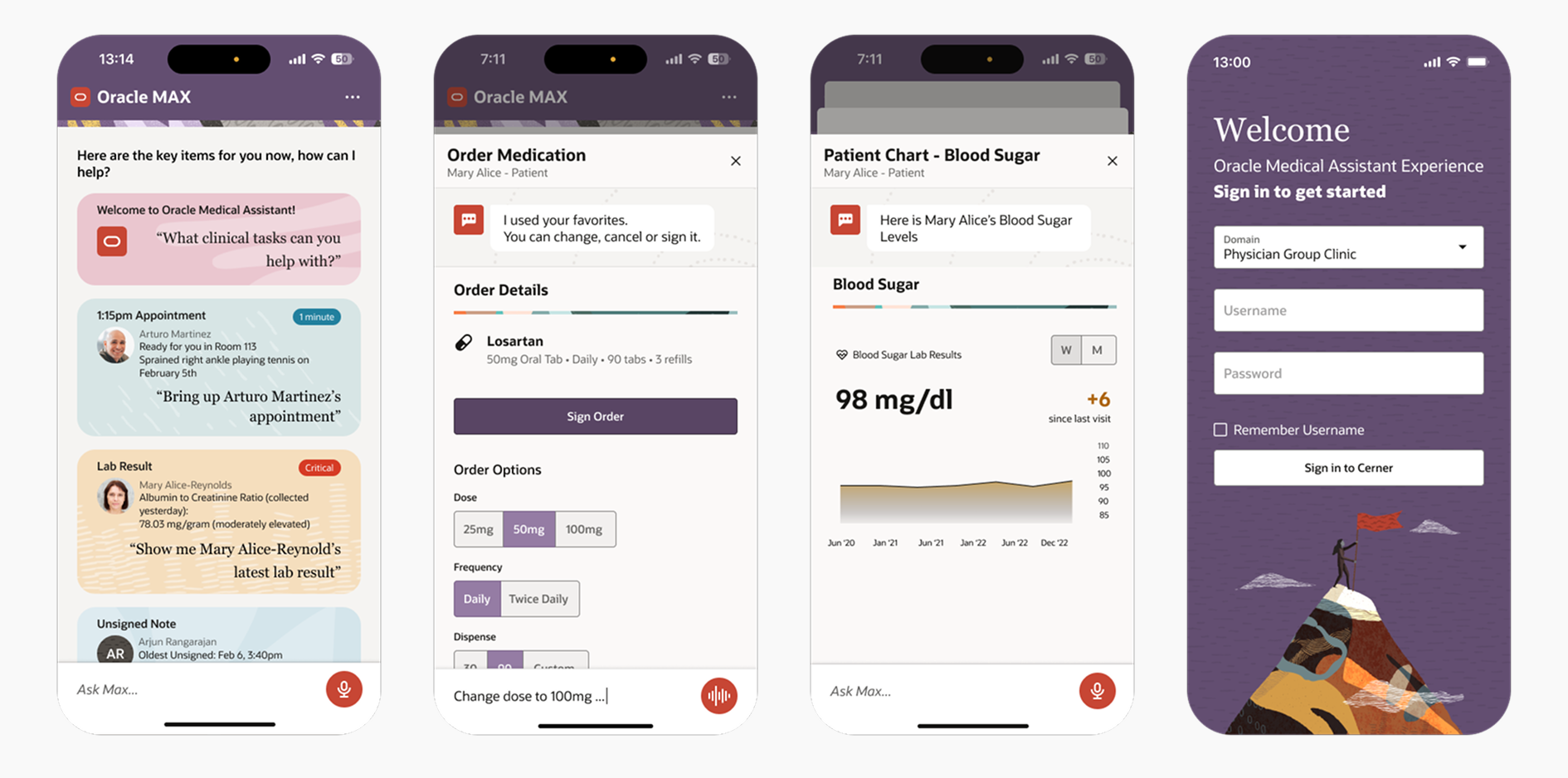
MAX is a clinical AI assistant designed to give doctors their lives back. It handles voice commands, dictation, and medical record retrieval so healthcare pros can spend more quality time with their patients instead of a screen.


The Challenge
Clinicians are drowning in paperwork. The goal wasn't just to reduce manual data entry, it was to build an intelligent assistant that could follow a doctor from a mobile phone to a desktop to a room monitor seamlessly. We needed to design a product and service that integrated seamlessly with legacy infrastructure to reduce cognitive load, allowing doctors to focus on care rather than the friction of filing paperwork.
My Role
I was the Principal UX Designer on a tiny team basically walking into a new industry from scratch. I led the interaction and visual design, making sure the product felt cohesive even though the input methods (voice, typing, and touch) were constantly changing.
Design Process
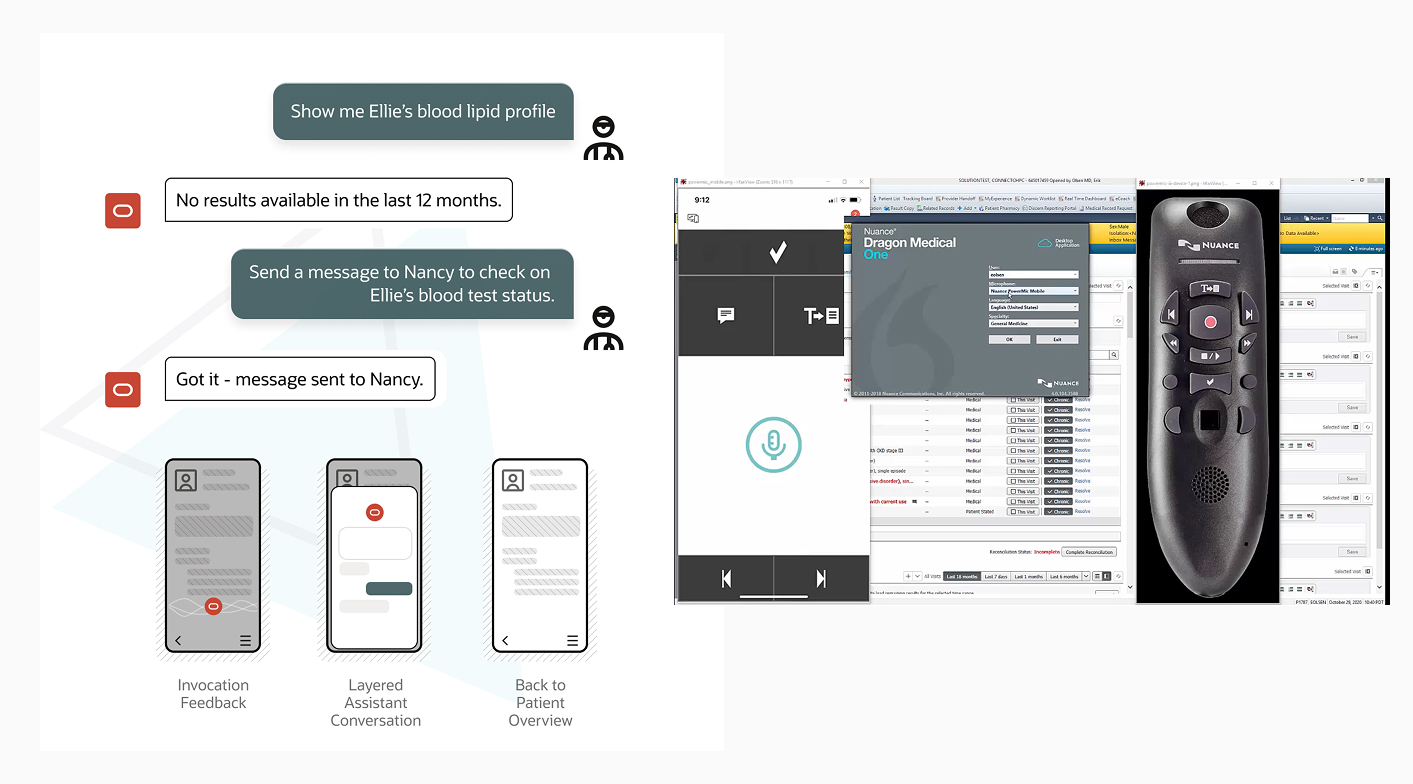
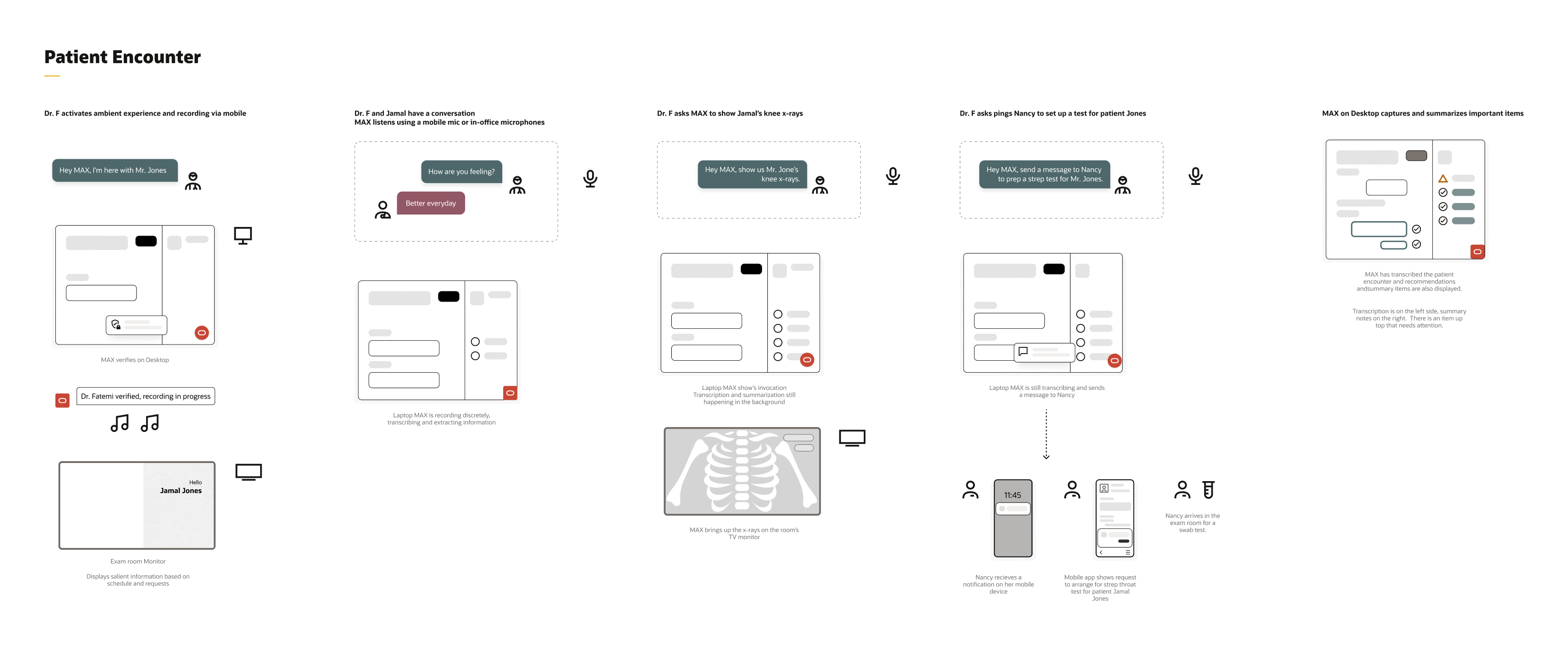
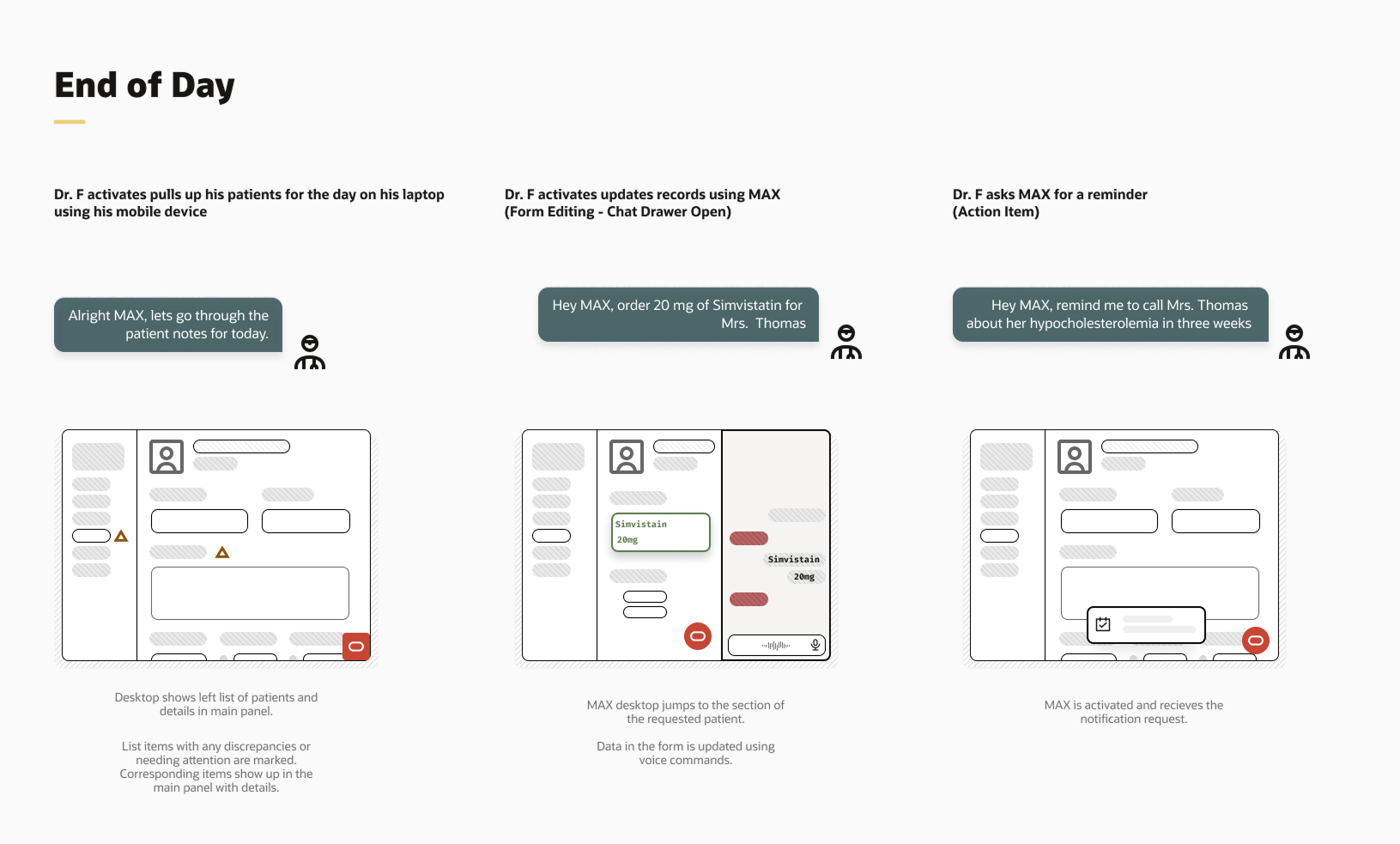
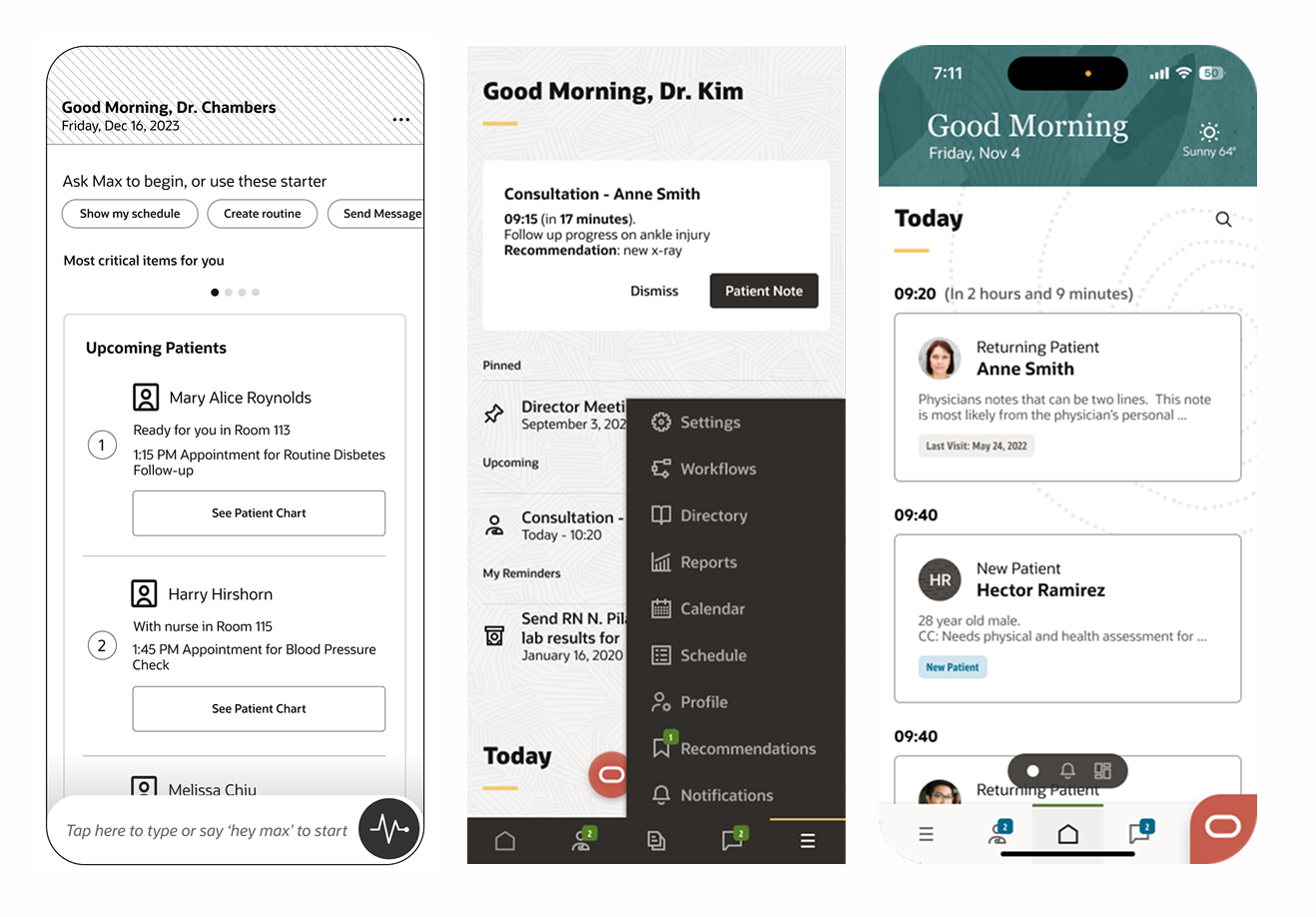
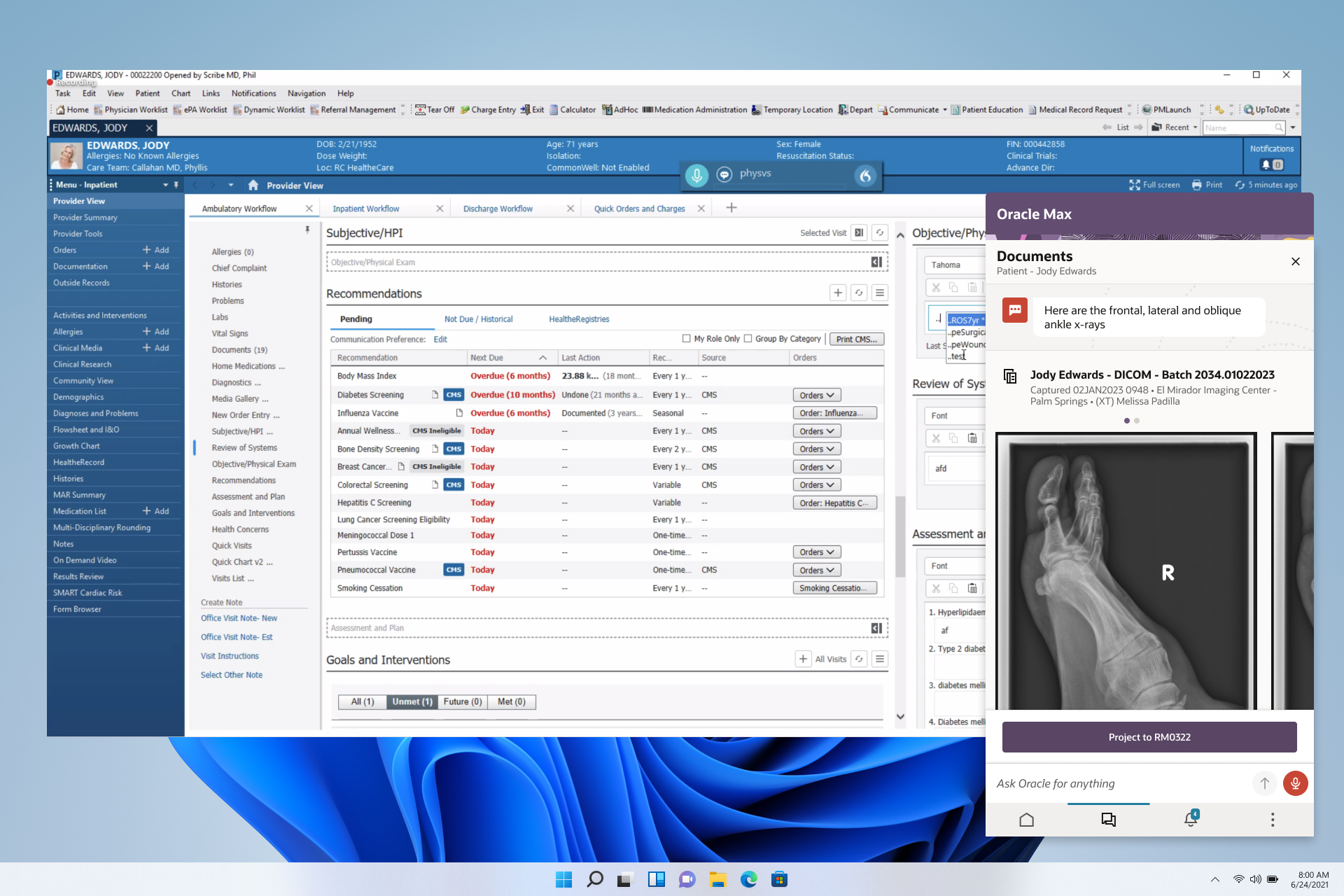
I spent a lot of time learning how clinicians actually work and move in their environments, which directly shaped how the MAX product formed. It had to function across a "device chain," meaning a tablet in the hall, a desktop in the office, and a monitor in the exam room needed to work together to remove friction from a clinician's schedule. We hit a major pivot mid-MVP when we realized we had to integrate directly with the existing EHR system. That meant turning a mobile-first design into a desktop companion app almost overnight, with the added challenge of making sure it felt like a native part of the experience rather than a random plugin or add-on.
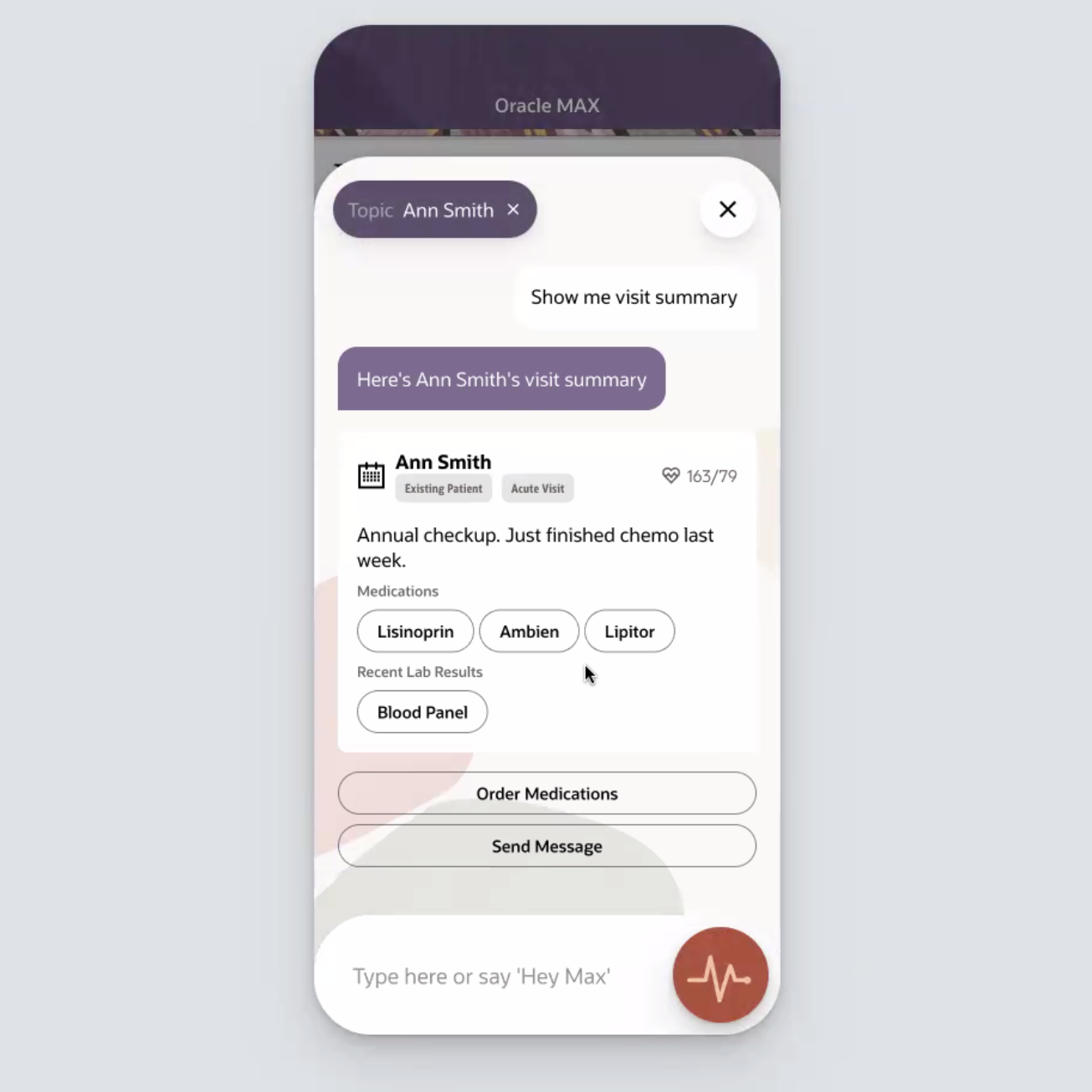
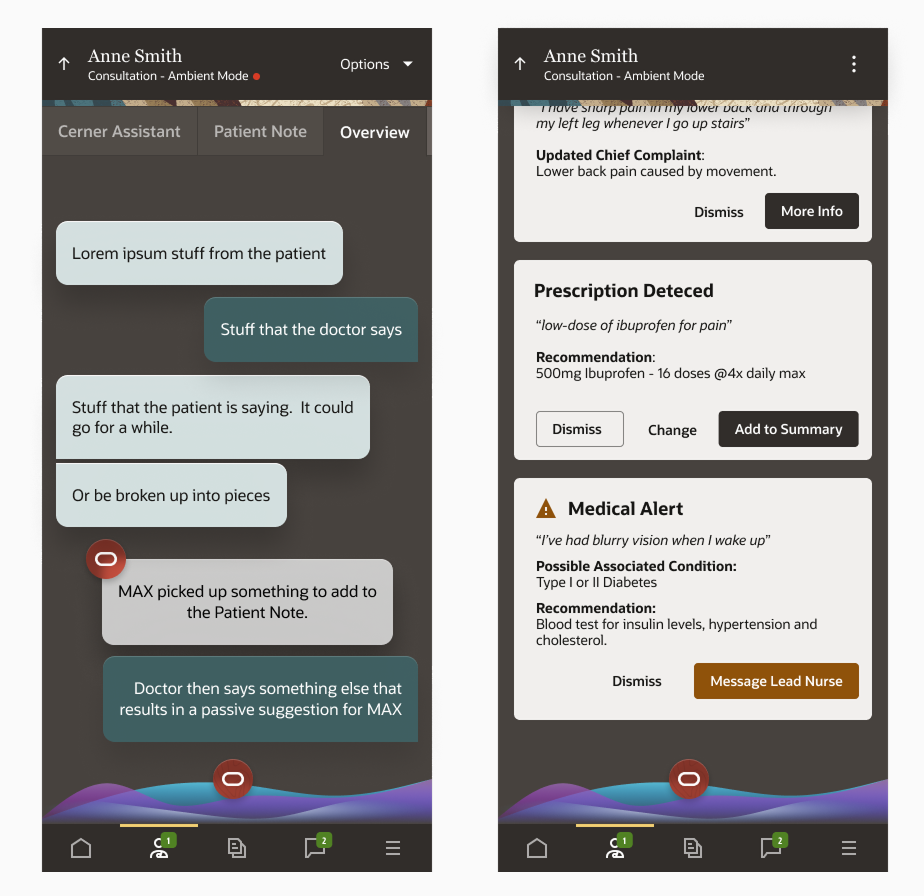
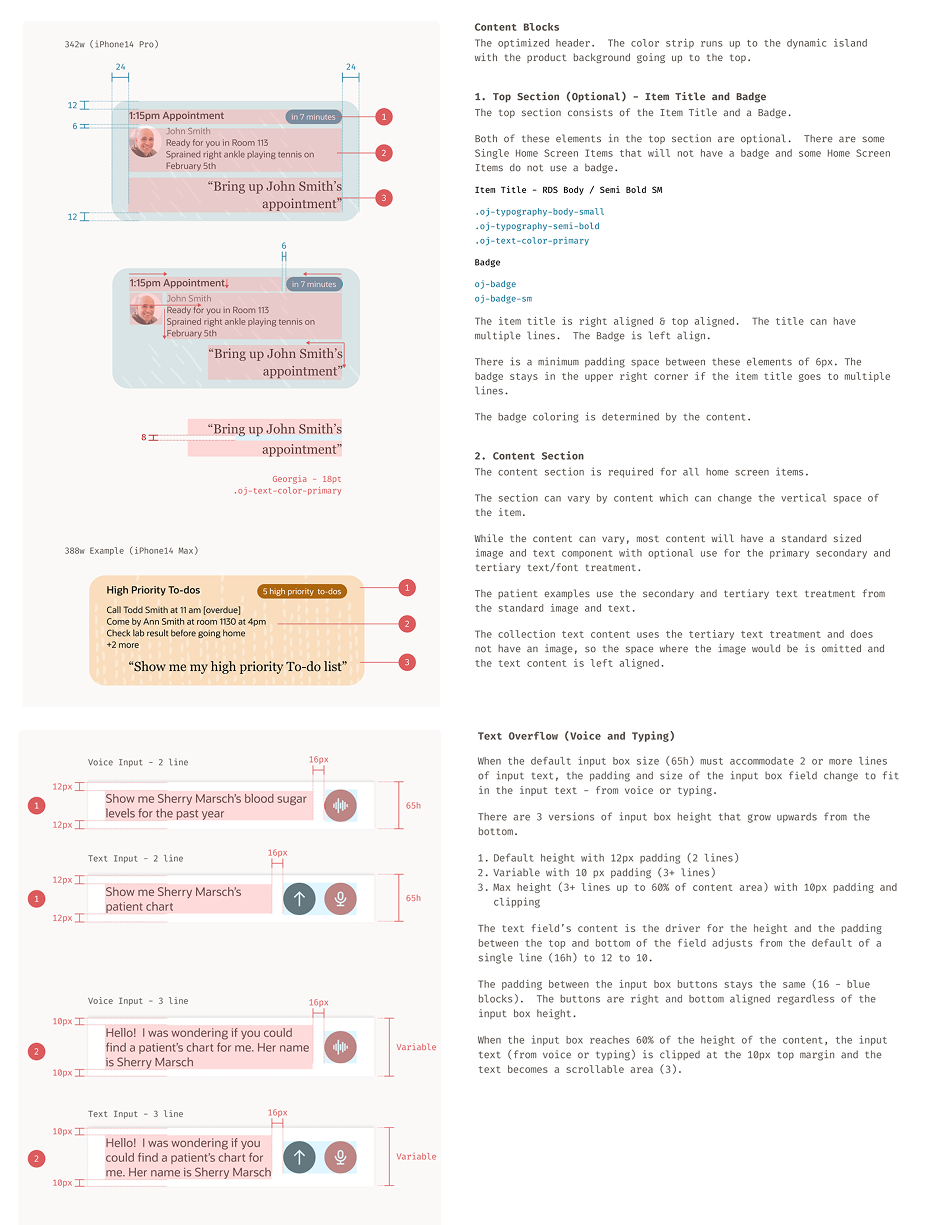
A dynamic conversation with MAX
Effects & Results
We reached a major milestone by proving the use case: voice commands, dictation, and real-time record retrieval worked in the context of a high-pressure clinical environment. Because of HIPAA constraints, our initial testing rounds were handled by specialized on-location teams, but the feedback was clear - the system was well-received and ready for the next level. By the time I moved on from Oracle, the project was in a robust state for handoff to the Cerner team. Our work at ODA served as the essential proof of concept, showing exactly how Oracle's infrastructure could integrate with Cerner's health record systems to prioritize accuracy and efficiency in patient care.
Conclusion
This was the first time I got to do the "boots on the ground" research I love: sitting with users (physicians), picking their brains and watching them work. We launched into a tough environment with a pivot in the middle and consultants who had very loud opinions. We held our ground, negotiated the priorities, and shipped a product that worked.